Author name: scalemyediting@gmail.com

Top 15 Digital Marketing Interview Questions and Answers for Beginners
blog

Top 15 Digital Marketing Interview Questions and Answers for Beginners

Preparing for your first digital marketing job interview can feel challenging, especially if you have no professional experience. Interviewers usually want to understand your knowledge of digital marketing, familiarity with online platforms, communication skills, and willingness to learn. The good news is that you can prepare for common questions and improve your confidence before the interview. In this guide, we cover the top digital marketing interview questions and answers for beginners to help you prepare for an entry-level digital marketing role. Top Digital Marketing Interview Questions for Bigginers 1. What Is Digital Marketing? Answer: Digital marketing is the process of promoting products, services, or brands through online channels such as search engines, social media, websites, email, and digital advertisements. Its primary goal is to reach the right audience, increase brand awareness, generate leads, and drive sales. 2. What Are the Main Types of Digital Marketing? Answer: The main types of digital marketing include: Search Engine Optimization (SEO): Improving website visibility in organic search results. Social Media Marketing (SMM): Promoting brands on platforms such as Instagram, Facebook, and LinkedIn. Pay-Per-Click Advertising (PPC): Running paid advertisements on platforms such as Google Ads. Content Marketing: Creating blogs, videos, and other valuable content. Email Marketing: Sending promotional messages and updates to subscribers. Affiliate Marketing: Promoting products through partners who earn commissions. Influencer Marketing: Collaborating with content creators to reach their audiences. 3. What Is SEO, and Why Is It Important? Answer: SEO stands for Search Engine Optimization. It involves optimizing a website to improve its visibility in unpaid search engine results. SEO is important because it can attract relevant website visitors, build credibility, and generate long-term organic traffic. The three main areas are on-page SEO, off-page SEO, and technical SEO. 4. What Is the Difference Between SEO and SEM? Answer: SEO focuses on improving organic search visibility, while SEM is commonly used to describe search engine marketing that includes paid search advertising and, in some contexts, broader search marketing activities. SEO generally takes time to produce results, whereas paid search campaigns can start generating traffic soon after launch. 5. What Is Keyword Research? Answer: Keyword research is the process of identifying the words and phrases people use when searching online. Digital marketers use keyword research to understand search intent and create relevant website content. Tools such as Google Keyword Planner, Google Trends, and other SEO research tools can help identify keyword ideas. 6. What Is Social Media Marketing? Answer: Social media marketing involves using social platforms to promote a business, engage with customers, and increase brand awareness. A social media marketer may create posts, publish reels, respond to comments, plan content calendars, and analyze engagement metrics. 7. What Is the Difference Between Organic and Paid Marketing? Answer: Organic marketing attracts an audience through unpaid activities such as SEO, regular social media posts, and content marketing. Paid marketing uses advertising budgets to promote content, products, or services. Both methods can work together to improve visibility and support business growth. 8. What Is Google Ads? Answer: Google Ads is an online advertising platform that allows businesses to display ads across eligible Google properties and partner placements. Marketers use it to reach potential customers through search ads, display ads, video campaigns, and other campaign types. 9. What Is Google Analytics 4 (GA4)? Answer: Google Analytics 4 is an analytics platform that helps businesses understand how users interact with their websites and apps. It provides insights into traffic sources, user behavior, engagement, and conversions, helping marketers evaluate campaign performance. 10. What Are Digital Marketing KPIs? Answer: Key Performance Indicators (KPIs) are measurable values used to evaluate marketing performance. Common digital marketing KPIs include website traffic, click-through rate (CTR), conversion rate, cost per lead, customer acquisition cost, and return on ad spend (ROAS). 11. What Is a Conversion Rate? Answer: Conversion rate is the percentage of visitors who complete a desired action, such as purchasing a product, filling out a form, or subscribing to a newsletter. It is calculated by dividing the number of conversions by the number of relevant visitors or sessions, then multiplying by 100. 12. How Would You Increase Website Traffic? Answer: I would begin by understanding the target audience and researching relevant keywords. Then, I would improve website SEO, publish useful content, promote it through social media, and explore paid advertising if the budget allows. I would also monitor analytics to identify which channels bring the most relevant visitors. 13. Which Digital Marketing Tools Do You Know? Answer: Some commonly used digital marketing tools include Google Analytics 4, Google Search Console, Google Keyword Planner, Google Ads, Canva, Meta Business Suite, and email marketing platforms. As a beginner, I would focus on understanding the basic functions of these tools and practicing with available learning resources. 14. Why Should We Hire You as a Digital Marketing Fresher? Answer: Although I am at the beginning of my career, I have a strong interest in digital marketing and am eager to learn. I understand the basics of SEO, social media marketing, content marketing, and analytics. I am willing to take feedback, learn new tools, and contribute to the team. I believe my enthusiasm, adaptability, and commitment to learning will help me grow in this role. 15. How Do You Stay Updated With Digital Marketing Trends? Answer: I follow official resources such as Google Search Central, Google Analytics documentation, and updates from major advertising platforms. I also read industry blogs, watch educational tutorials, and practice new techniques through small projects. Conclusion Preparing for digital marketing interview questions and answers is an important step toward starting your career. Focus on understanding the fundamentals of SEO, social media marketing, PPC, content marketing, and analytics rather than memorizing every answer. Practice explaining concepts in your own words and support your answers with examples whenever possible. You can also create a small portfolio, such as an SEO audit, a sample social media calendar, or a mock advertising campaign, to demonstrate your practical skills. With consistent preparation and a willingness to learn, you can
SEO vs Social Media Marketing
blog

SEO vs Social Media Marketing: Which Career Should You Choose?

Digital marketing offers several career paths, but SEO and Social Media Marketing are two of the most popular options for beginners and professionals. Both fields offer opportunities to work with brands, agencies, startups, e-commerce businesses, and international clients. If you are wondering SEO vs Social Media Marketing: which career should you choose, the answer depends largely on your interests, strengths, and the type of work you enjoy. Both careers can provide valuable experience and opportunities when you build practical skills and keep learning. What Does an SEO Professional Do? SEO, or Search Engine Optimization, focuses on improving a website’s visibility in search engines such as Google. The goal is to help relevant users discover a website when they search for products, services, or information. An SEO professional may work on: Keyword research On-page SEO Technical SEO Content optimization Internal linking Link building Local SEO Website audits Search Console and analytics Organic traffic and conversion analysis SEO combines marketing, content, data analysis, and technical understanding. If you enjoy research, websites, analytics, and solving optimization problems, SEO can be an interesting career direction. What Does a Social Media Marketer Do? Social Media Marketing focuses on building a brand’s presence and audience across platforms such as Instagram, Facebook, LinkedIn, YouTube, and other relevant channels. A social media professional may handle: Content planning Social media calendars Reels and short-form video ideas Captions and creative copy Community engagement Influencer collaborations Social media campaigns Paid social advertising Performance analysis Brand communication This career combines creativity, communication, content, audience understanding, and marketing strategy. SEO vs Social Media Marketing: Key Differences The biggest difference is the type of audience interaction involved. SEO primarily connects businesses with people who are actively searching for information, products, or services. Social media marketing focuses more on reaching people while they are discovering, consuming, and interacting with content. SEO work can involve considerable research, website analysis, content optimization, and data interpretation. Social media marketing generally involves more creative planning, content production, communication, and audience engagement. Both areas also overlap. For example, keyword research can help inform content ideas, while social media content can contribute to brand visibility and audience growth. Which Career Requires More Creativity? Both careers involve creativity, but the type of creativity is different. SEO professionals can be creative when developing content strategies, finding keyword opportunities, improving website structures, and creating search-focused content. Social media marketers often work more directly with creative formats such as videos, images, captions, hooks, storytelling, and campaigns. If you naturally enjoy creating content and coming up with new ideas, social media marketing may feel particularly engaging. If you enjoy finding patterns, researching topics, analyzing data, and optimizing websites, SEO may be a natural fit. Which Career Has More Technical Work? SEO generally involves more technical concepts, especially if you move into technical SEO. Understanding website architecture, crawling, indexing, page speed, structured data, redirects, canonical tags, and other website elements can become part of the job. Social media marketing can also involve technical skills, particularly when working with advertising platforms, analytics, tracking, audience targeting, and campaign optimization. You don’t need to know everything from day one. Both careers can be learned progressively through practical projects. Which Career Should a Beginner Choose? Instead of choosing based only on job titles or salary expectations, consider the type of work you want to perform regularly. Choose SEO if you enjoy: Websites and search engines Research and keyword analysis Data and performance reports Content optimization Technical problem-solving Long-term organic growth strategies Choose Social Media Marketing if you enjoy: Content creation Reels and short videos Creative campaigns Writing captions and hooks Audience interaction Brand building and storytelling You can also learn both. Understanding SEO and social media together can make you a more versatile digital marketing professional. Career Growth in SEO and Social Media Marketing Both fields offer multiple career paths. An SEO professional can progress toward roles such as SEO Specialist, SEO Manager, Technical SEO Specialist, Local SEO Specialist, or SEO Strategist. A social media professional can progress toward roles such as Social Media Executive, Social Media Manager, Content Strategist, Social Media Strategist, or Digital Marketing Manager. With experience, professionals can also work independently, manage clients, specialize in a niche, or build their own digital marketing services. Final Thoughts When comparing SEO vs Social Media Marketing, there isn’t one career that is universally suitable for everyone. Both are valuable digital marketing skills with different day-to-day responsibilities and learning paths. The practical approach is to understand both fields, try real projects, and identify which type of work matches your interests and strengths. You can start with one specialization and gradually develop skills in the other. For beginners, the most valuable step is not simply choosing a job title, it is building real skills, creating a portfolio, working on practical projects, understanding analytics, and continuously adapting to changes in digital marketing.

Digital Marketing vs Traditional Marketing
blog

Digital Marketing vs Traditional Marketing: Which Career Is Better?

Marketing is an essential part of almost every business, and it offers several career opportunities for people with different interests and skills. Two major areas are digital marketing and traditional marketing. While traditional marketing uses channels such as television, newspapers, radio, magazines, and outdoor advertising, digital marketing focuses on online platforms such as search engines, social media, websites, email, and digital advertising. If you are considering a career in marketing, understanding the difference between digital marketing vs traditional marketing can help you choose a learning path that matches your interests and career goals. What Is Digital Marketing? Digital marketing involves promoting products, services, and brands through online channels. Businesses use digital platforms to reach potential customers, communicate with audiences, generate leads, and drive sales. Common areas of digital marketing include: Search Engine Optimization (SEO) Social Media Marketing Google Ads and PPC Content Marketing Email Marketing Influencer Marketing Affiliate Marketing Online Reputation Management Analytics and Conversion Optimization Digital marketing professionals often work with tools such as Google Analytics, Google Search Console, advertising platforms, content management systems, and social media management tools. What Is Traditional Marketing? Traditional marketing refers to marketing activities that use established offline channels to communicate with an audience. It includes television advertisements, radio, newspapers, magazines, billboards, brochures, direct mail, events, and other offline promotional methods. Traditional marketing roles can involve campaign planning, market research, media planning, advertising coordination, public relations, brand management, event marketing, and sales support. These activities require an understanding of customer behavior, branding, communication, market positioning, and campaign planning. Digital Marketing vs Traditional Marketing: Key Difference The primary difference is the medium through which businesses communicate with their audiences. Digital marketing uses internet-based channels, while traditional marketing primarily uses offline media. However, modern businesses often use a combination of both approaches as part of their overall marketing strategy. For example, a company may advertise through billboards while simultaneously running Google Ads, social media campaigns, and email marketing. Which Career Offers More Specialization? Digital marketing has many specialized career paths. Professionals can focus on SEO, paid advertising, social media, content marketing, email marketing, analytics, or other areas. Traditional marketing also provides several career paths, including brand management, advertising, media planning, public relations, market research, and event marketing. Your preferred specialization can depend on whether you enjoy working with digital platforms and data or prefer broader brand, media, and offline campaign activities. Which Career Is More Suitable for Creative People? Both careers require creativity, but the nature of creative work can differ. Traditional marketing may involve developing advertising concepts, campaign themes, television or print advertisements, outdoor campaigns, and brand communication. Digital marketing can involve creating social media campaigns, video content, website content, ad creatives, email campaigns, and interactive experiences. If you enjoy writing, visual content, storytelling, campaign concepts, or communication, both fields can provide opportunities to use those skills. Career Growth and Skills A successful marketing career depends on practical skills, communication, creativity, analytical thinking, and the ability to understand customer behavior. Digital marketing professionals can progress into roles such as Digital Marketing Executive, SEO Specialist, PPC Specialist, Social Media Manager, Content Strategist, Digital Marketing Manager, or Marketing Strategist. Traditional marketing professionals can pursue roles such as Marketing Executive, Brand Executive, Media Planner, Advertising Manager, Public Relations Specialist, or Brand Manager. Professionals can also combine skills from both areas and develop into broader marketing roles. How Should Beginners Choose? Instead of choosing a career solely based on which field sounds more popular, consider the type of work you enjoy. Digital marketing may be a suitable learning path if you enjoy websites, search engines, social media, online advertising, content creation, analytics, and digital tools. Traditional marketing may appeal to you if you are interested in advertising campaigns, branding, media, events, public relations, market research, and offline customer communication. Another practical option is to learn the fundamentals of both fields before specializing. This can help you understand how different marketing channels work together. Final Thoughts The comparison between digital marketing vs traditional marketing is not simply about choosing one field over another. Both contribute to how businesses build brands, reach customers, and achieve marketing objectives. Your career decision should depend on your interests, strengths, preferred work environment, and the skills you want to develop. Whichever path you choose, gaining practical experience through internships, projects, certifications, or real campaigns can help you build a strong marketing career. Marketing continues to evolve, so professionals who remain curious, understand their audience, develop practical skills, and keep learning can create opportunities across different areas of the industry.

How to Start a Digital Marketing Career
blog

How to Start a Digital Marketing Career: A Beginner’s Guide

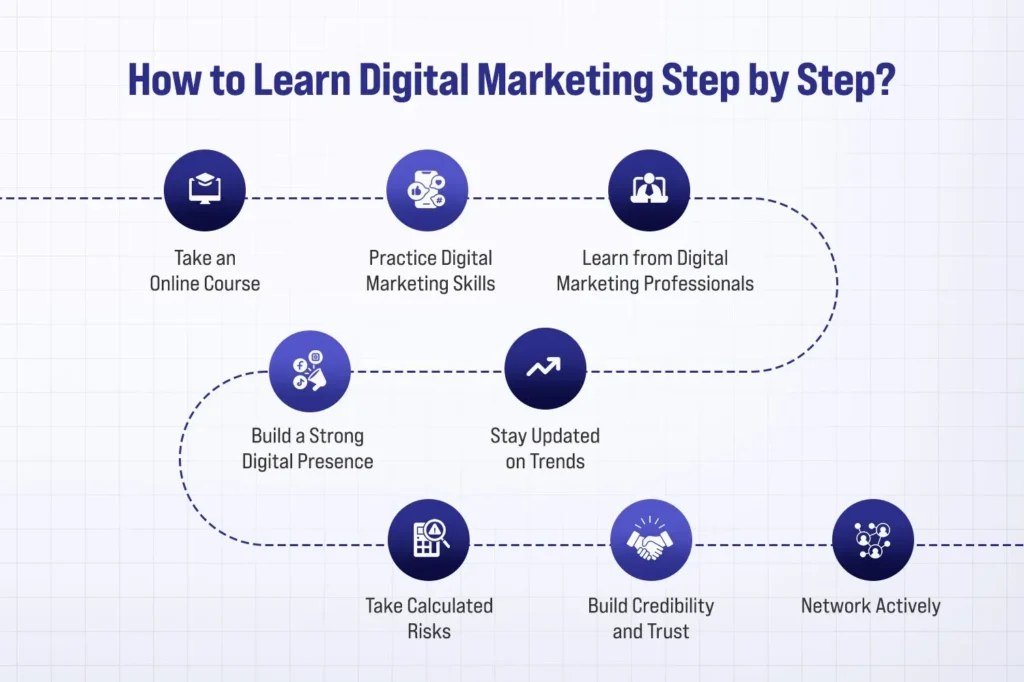
Digital marketing has become an important part of how businesses connect with customers, promote their products, and build their brands online. As more businesses invest in websites, social media, search marketing, online advertising, and content, digital marketing has become an interesting career field for students, freshers, and professionals looking to develop new skills. If you are wondering how to start a digital marketing career, the best approach is to understand the fundamentals, develop practical skills, work on real projects, and continuously learn as the industry evolves. Step by Step Guide 1. Understand What Digital Marketing Includes Digital marketing is a broad field rather than a single skill. Before choosing a specialization, understand the major areas involved. These include: Search Engine Optimization (SEO) Social Media Marketing Google Ads and PPC Content Marketing Email Marketing Influencer Marketing Website Marketing Analytics and Reporting Online Reputation Management Learning the basics of these areas can help you understand how different digital marketing channels work together. 2. Choose the Right Digital Marketing Skills Once you understand the fundamentals, identify the skills that interest you most. If you enjoy websites, research, and analytics, SEO could be an area to explore. If you enjoy creativity and communication, social media and content marketing may be suitable. People interested in numbers and advertising performance can explore PPC and paid media. You don’t have to specialize immediately. Start by developing a broad understanding and gradually identify the areas where you want to build deeper expertise. 3. Get Practical Training Learning digital marketing through practical training can help beginners understand how marketing campaigns work beyond theory. A structured course can provide a learning roadmap and introduce students to different digital marketing tools, techniques, and concepts. ISDM (Indian Institute of Digital Marketing) is an institute that learners can explore when looking for digital marketing training. A structured learning environment can help beginners understand different aspects of digital marketing and develop their skills systematically. When selecting a digital marketing institute, look for a curriculum that covers important areas such as SEO, social media marketing, paid advertising, content marketing, analytics, and practical project work. 4. Work on Real Projects One of the most important steps in starting a digital marketing career is gaining practical experience. You can create a small website or blog and practice keyword research, on-page SEO, content creation, and analytics. You can also create a social media page to experiment with content formats, audience engagement, and performance tracking. Practical projects give you an opportunity to understand how digital marketing concepts work in real situations. 5. Learn Digital Marketing Tools Digital marketers work with a variety of tools. Beginners should gradually become familiar with platforms used for research, analytics, advertising, content creation, and website management. Depending on your specialization, useful tools can include Google Search Console, Google Analytics, Google Ads, keyword research platforms, social media management tools, content management systems, and creative tools. You don’t need to master every tool at once. Focus on the tools that are relevant to the skills you are currently learning. 6. Build a Digital Marketing Portfolio A portfolio can help demonstrate your practical knowledge when applying for internships or entry-level jobs. Your portfolio could include: SEO audits Keyword research examples Blog content Social media calendars Social media creatives Google Ads campaign examples Website optimization projects Analytics reports Case studies If you don’t have professional client experience yet, create sample projects and clearly identify them as practice or personal projects. 7. Apply for Internships and Entry-Level Roles After developing your foundational skills, start looking for internships and entry-level opportunities. Job titles can include Digital Marketing Executive, SEO Executive, Social Media Executive, Content Marketing Executive, or PPC Executive. During interviews, be prepared to explain your projects, the tools you have used, the strategies you understand, and how you would approach a marketing problem. Practical knowledge can help you communicate your capabilities more effectively. 8. Keep Learning and Updating Your Skills Digital marketing changes continuously. Search algorithms, advertising platforms, social media features, content formats, and consumer behavior can all evolve. Successful digital marketing professionals therefore need to keep learning. Follow industry updates, experiment with new strategies, analyze campaign performance, and regularly improve your skills. Why Consider ISDM for Digital Marketing Training? For students and beginners looking for a structured way to learn digital marketing, ISDM (Indian Institute of Digital Marketing) can be considered as part of their training journey. Before enrolling, prospective students should review the course curriculum, practical learning opportunities, trainer experience, project structure, placement or career support, and other program details to determine whether the institute matches their learning goals. Choosing the right training environment can give beginners a structured starting point while they build the practical skills needed for a career in digital marketing. Conclusion Starting a digital marketing career doesn’t require knowing everything from the beginning. Start with the fundamentals, explore different specializations, learn practical tools, work on projects, build a portfolio, and gain experience through internships or entry-level roles. If you are looking for structured digital marketing training, exploring ISDM (Indian Institute of Digital Marketing) can be one option to consider. Combine formal learning with independent practice and real projects to develop skills that can support your long-term career growth. The digital marketing industry offers multiple career paths, so focus on building genuine skills, staying curious, and continuously improving your knowledge.

What Skills Are Required for a Digital Marketing Job
blog

What Skills Are Required for a Digital Marketing Job?

Digital marketing has become an important part of modern business growth. From startups to established companies, businesses use digital channels to attract customers, generate leads, build brand awareness, and increase sales. As a result, there is growing demand for professionals with the right digital marketing skills. If you are planning to start a career in digital marketing or looking for a digital marketing job, understanding the skills employers commonly look for can help you prepare for the industry. Here are some of the most important skills you should develop. Required Skills for Digital Marketing Job 1. Search Engine Optimization (SEO) SEO is one of the most valuable skills for a digital marketing professional. It involves improving websites so they can gain better visibility in search engine results. A digital marketer should understand keyword research, on-page SEO, technical SEO, link building, content optimization, Google Search Console, and basic SEO analytics. Knowledge of local SEO and newer areas such as Generative Engine Optimization (GEO) can also be useful as search behaviour continues to evolve. 2. Social Media Marketing Social media platforms are essential for building brand awareness and engaging with audiences. Digital marketers should understand how platforms such as Instagram, Facebook, LinkedIn, YouTube, and other social channels work. Important skills include content planning, audience research, social media strategy, hashtag research, community engagement, performance tracking, and creating engaging posts and short-form video ideas. 3. Content Marketing Content is a major part of digital marketing. Professionals should know how to create useful and engaging content for websites and social media. This can include blog writing, website content, social media captions, email content, video scripts, and promotional copy. Basic knowledge of SEO content writing can help marketers create content that is useful for both users and search engines. 4. Google Ads and Paid Advertising Many businesses use paid advertising to generate leads and sales. Understanding platforms such as Google Ads and Meta Ads can therefore be an advantage when applying for digital marketing roles. You should understand campaign objectives, audience targeting, keyword selection, ad copy, budgets, conversion tracking, and basic performance metrics such as CTR, CPC, conversions, and ROAS. 5. Analytics and Data Interpretation Digital marketing is not only about creating campaigns; it is also about understanding their performance. Basic data analysis skills can help you identify what is working and where improvements are required. Learn how to work with tools such as Google Analytics and Google Search Console. You should be comfortable interpreting traffic, conversions, engagement, keywords, and other important marketing metrics. 6. Email Marketing Email marketing remains useful for communicating with existing and potential customers. Digital marketers should understand email campaigns, audience segmentation, subject lines, newsletters, automation, and basic email performance metrics. Understanding how to create relevant and engaging email campaigns can add another valuable skill to your digital marketing profile. 7. Graphic Design and Video Skills You don’t necessarily need to become a professional designer, but basic creative skills can be highly useful. Familiarity with tools such as Canva can help you create social media posts, advertisements, presentations, and other marketing creatives. Basic video editing skills can also be valuable because short-form videos and reels are widely used in digital marketing. 8. Communication and Problem-Solving Technical knowledge alone isn’t enough for a successful digital marketing career. Good communication skills help you work with clients, designers, developers, content writers, and other team members. Problem-solving is equally important. Digital marketers often need to analyse declining traffic, poor ad performance, low engagement, or changes in search rankings and develop practical solutions. Final Thoughts A successful digital marketing professional needs a combination of technical, creative, analytical, and communication skills. SEO, social media marketing, content creation, paid advertising, analytics, email marketing, and basic design are some of the key areas to learn. If you are a beginner, you don’t need to master everything at once. Start with the fundamentals, practise on real or sample projects, build a portfolio, and gradually expand your skills. Consistent learning and practical experience can help you become better prepared for a digital marketing job.`

Digital Marketing Salary for Freshers in India
blog

Digital Marketing Salary for Freshers in India

Digital marketing has become a popular career choice for students and fresh graduates in India. As more businesses move online, companies need people who can manage SEO, social media, paid advertising, content, email marketing, and other digital channels. One of the first questions most beginners have is “What is the digital marketing salary for freshers in India?” The answer depends on several factors, including your skills, location, job role, company, and practical experience. Let’s understand what a fresher can realistically expect. Average Digital Marketing Salary for Freshers A digital marketing fresher in India can generally expect a starting salary of around ₹2.5 lakh to ₹4.5 lakh per year, depending on the company and skill set. In monthly terms, this is roughly ₹20,000 to ₹37,500 per month before deductions. Some entry-level positions may offer less, especially when candidates have no practical experience. On the other hand, candidates with good practical skills, internships, certifications, or a strong portfolio may find opportunities at a higher starting salary. These numbers are general ranges, not guaranteed salaries. The actual offer can vary significantly from one company and location to another. Salary Based on Digital Marketing Job Roles Your job title can also affect your starting salary. 1. SEO Executive An SEO Executive works on keyword research, on-page SEO, technical basics, content optimization, and link-building activities. Freshers may typically start around ₹2.5 lakh to ₹4 lakh per year. 2. Social Media Executive Social media professionals create content, manage social media accounts, track engagement, and support social media campaigns. Entry-level salaries can be around ₹2.5 lakh to ₹4 lakh per year, depending on the company and responsibilities. 3. PPC or Performance Marketing Executive PPC professionals work with paid advertising platforms such as Google Ads and social media advertising platforms. Because paid advertising involves managing business budgets and measuring results, candidates with practical knowledge can sometimes command better starting salaries. 4. Content Marketing Executive Content marketers work on blogs, website content, social media content, email campaigns, and other marketing materials. Freshers may start around ₹2.5 lakh to ₹4 lakh per year, although salaries vary based on writing and marketing skills. What Affects Your Digital Marketing Salary? Your starting salary isn’t determined by your degree alone. Several factors can make a difference. Practical skills: Knowing how to actually perform keyword research, create campaigns, analyze data, or optimize content is valuable. Internships: Practical experience can make your resume stronger and give you examples to discuss during interviews. Portfolio: A portfolio showing your projects can help demonstrate what you can do, even if you don’t have full-time experience. Location: Salaries can differ between cities. Major business and technology hubs may have more opportunities and, in some cases, higher salary ranges. Company size: Agencies, startups, e-commerce companies, and large organizations can have very different salary structures. How Can Freshers Get a Better Salary? If you want to build a career in digital marketing, don’t focus only on collecting certificates. Learn skills and practice them. Start by understanding SEO, Google Ads, social media marketing, content marketing, analytics, and basic conversion optimization. You don’t need to master everything at once. Try creating your own website or working on small projects. Experiment with keyword research, content creation, SEO, or paid campaigns where appropriate. These projects can become useful portfolio pieces when applying for jobs. Also, keep learning because digital marketing changes regularly. Platforms, search algorithms, advertising features, and customer behavior can all change over time. Is Digital Marketing a Good Career for Freshers? Digital marketing can be a good career option for people who enjoy creativity, technology, communication, and data. The starting salary may not always be very high, but your earning potential can improve as you develop specialized skills and gain experience. Roles in areas such as performance marketing, SEO, analytics, and marketing strategy can offer opportunities for career growth. The key is to focus on skills and measurable results, rather than expecting a high salary immediately. Final Thoughts The digital marketing salary for freshers in India can generally start around ₹2.5 lakh to ₹4.5 lakh per year, but there is no fixed number for every candidate. Your skills, experience, location, job role, and company can all influence your salary. If you’re a fresher, focus on building practical knowledge, completing internships or projects, and creating a strong portfolio. Instead of asking only, “How much can I earn as a fresher?”, also ask, “What skills can I develop that will make me more valuable?” That approach can help you build a stronger and more sustainable digital marketing career.

How to Start a Career in Digital Marketing as a Fresher?
blog

How to Start a Career in Digital Marketing as a Fresher?

Digital marketing has become an important part of almost every modern business. From SEO and social media to paid advertising and content marketing, companies need skilled professionals to reach their target audiences online. This growing demand makes digital marketing an attractive career option for freshers. If you are wondering how to get job in digital marketing as a fresher, the good news is that you don’t necessarily need years of experience. With the right skills, practical knowledge, and a strong portfolio, you can start building a successful career in this field. Step by Step Guide 1. Understand What Digital Marketing Involves Before starting your career, understand the different areas of digital marketing. It is a broad industry that includes several specializations. Some of the most important areas are: Search Engine Optimization (SEO) Social Media Marketing Pay-Per-Click (PPC) Advertising Content Marketing Email Marketing Affiliate Marketing Google Analytics and reporting Online reputation management You don’t have to become an expert in everything. Start with the fundamentals and gradually identify the area that interests you most. 2. Learn Essential Digital Marketing Skills Having practical skills is more important than simply knowing digital marketing terminology. Start learning how different marketing channels work and how businesses use them to generate traffic, leads, and sales. For SEO, learn keyword research, on-page optimization, technical SEO basics, link building, Google Search Console, and SEO analytics. For social media marketing, focus on content planning, audience research, social media analytics, and campaign optimization. Similarly, if you are interested in PPC, learn campaign structure, keyword targeting, ad copy, bidding, conversion tracking, and performance analysis. 3. Take a Digital Marketing Course A structured digital marketing course can help you learn faster and understand how different marketing channels work together. When choosing a course, don’t focus only on the certificate. Look for courses that include practical assignments, live projects, case studies, and commonly used marketing tools. A good course should help you move from theoretical knowledge to practical implementation. 4. Get Relevant Certifications Certifications can add credibility to your resume when you are starting your career. Consider certifications related to areas such as Google Ads, analytics, SEO, content marketing, and social media. Reputable platforms and industry organizations offer several beginner-friendly certifications. However, remember that certifications alone won’t get you a job. Employers also want to see whether you can apply your knowledge to real marketing problems. 5. Work on Your Own Projects One of the best ways for a fresher to gain practical experience is by creating personal projects. For example, you can create a website or blog and practice SEO. Conduct keyword research, publish optimized content, track impressions and clicks, and analyze your results. You can also manage a social media page and create a content calendar. These projects give you real examples to discuss during interviews and help demonstrate your capabilities. 6. Build a Strong Portfolio A portfolio can make a significant difference when applying for digital marketing jobs for freshers. Include your best work, such as: SEO audits Keyword research reports Website optimization projects Blog writing samples Social media campaigns PPC campaign examples Analytics reports Personal marketing projects Whenever possible, include measurable results. For example, instead of simply saying that you optimized a website, explain how your work improved rankings, organic traffic, engagement, or conversions. 7. Apply for Internships and Entry-Level Jobs Don’t wait until you feel completely ready before applying. Look for internships and entry-level positions such as Digital Marketing Intern, SEO Executive, Digital Marketing Executive, PPC Executive, Social Media Executive, and Content Marketing Executive. An internship can provide valuable exposure to real clients, marketing campaigns, reporting, and professional tools. Even a few months of practical experience can make your resume much stronger. 8. Optimize Your Resume and LinkedIn Profile Your resume should highlight your skills, projects, certifications, and achievements. If you have completed a personal SEO project, mention exactly what you worked on. If you managed a social media account, explain the strategy and results. Similarly, optimize your LinkedIn profile with relevant keywords such as SEO, digital marketing, content marketing, Google Ads, social media marketing, and analytics. 9. Prepare for Digital Marketing Interviews Learning digital marketing is only one part of getting hired. You also need to prepare for interviews. Be ready to answer practical questions such as: How does SEO work? How do you perform keyword research? What is the difference between SEO and PPC? How would you increase website traffic? Which metrics do you use to measure a campaign? What would you do if organic traffic declined? Try to explain your answers with examples from your own projects. Final Thoughts Starting a digital marketing career as a fresher may seem difficult, but you can significantly improve your chances by focusing on skills, practical experience, and consistency. If you’re searching for how to get job in digital marketing, don’t wait for your first company to give you experience. Start building your own projects, create a portfolio, learn industry tools, complete relevant certifications, and apply for internships and entry-level positions. With continuous learning and hands-on practice, your first digital marketing opportunity can become the starting point for a rewarding long-term career.

Online vs Offline Digital Marketing Course
Uncategorized

Online vs Offline Digital Marketing Course: Which Is Better?

Digital marketing has become one of the most exciting career options for students, graduates, working professionals, and business owners. As demand for digital skills continues to grow, many beginners are looking for the right digital marketing course to build their careers. One common question is “Should you choose an online or offline digital marketing course?” Both learning formats can provide valuable knowledge and practical skills. The right choice depends on your learning style, schedule, career goals, and preferred learning environment. If your goal is to understand how to get job in digital marketing, choosing a course that provides practical exposure, industry knowledge, and hands-on learning can help you build a strong foundation. What Is an Online Digital Marketing Course? An online digital marketing course allows you to learn through a computer, laptop, or smartphone from almost anywhere. Courses can include recorded lessons, live classes, assignments, practical projects, quizzes, and learning resources. Benefits of Online Digital Marketing Courses Flexible Learning: Online courses allow you to learn according to your schedule. This can be especially useful for college students, working professionals, and people managing other responsibilities. Learn From Anywhere: You can access your classes from home, your workplace, or while travelling, making digital marketing education highly accessible. Access to Learning Resources: Many online courses provide recorded sessions, presentations, assignments, templates, and other resources that you can revisit while learning. Learn From Industry Experts: Online learning platforms often bring trainers and digital marketing professionals from different locations together, giving learners access to diverse industry perspectives. Practical Digital Skills: A well-structured online course can provide hands-on assignments and projects covering SEO, Google Ads, social media marketing, content marketing, analytics, and other areas. What Is an Offline Digital Marketing Course? An offline digital marketing course takes place in a physical classroom where students and trainers interact directly. It provides a traditional learning environment with face-to-face discussions, classroom activities, and practical exercises. Benefits of Offline Digital Marketing Courses Face-to-Face Interaction: Students can communicate directly with trainers and ask questions during the learning process. Structured Learning Environment: Regular classroom sessions can provide a consistent learning routine, which helps learners stay focused and organized. Immediate Doubt Resolution: If you have questions about SEO, PPC, social media, analytics, or other topics, you can discuss them directly with your trainer. Networking Opportunities: Classroom courses allow students to meet other aspiring digital marketers. These connections can become valuable professional relationships in the future. Hands-On Learning: Many offline institutes combine classroom education with practical assignments and projects, allowing students to apply what they learn. Online vs Offline: Which One Should You Choose? There is no single answer because both formats can help you develop digital marketing skills. If you prefer flexible schedules and learning from anywhere, an online digital marketing course can be an excellent choice. If you enjoy classroom interaction, face-to-face communication, and a structured learning environment, an offline digital marketing course can be a great option. The most important factor is not simply whether the course is online or offline. Look for a program that covers essential digital marketing concepts and provides practical exposure. How Can a Digital Marketing Course Help You Get a Job? Learning digital marketing can help you develop skills required for various entry-level roles. Depending on your interests, you can explore positions such as SEO Executive, Digital Marketing Executive, PPC Executive, Social Media Executive, Content Marketing Executive, or Digital Marketing Intern. If you’re wondering how to get job in digital marketing, focus on combining course knowledge with practical projects. Build a portfolio, work on real or practice campaigns, learn commonly used tools, and showcase your skills on your resume and LinkedIn profile. Final Thoughts Both online and offline digital marketing courses can be excellent ways to start your digital marketing journey. Your choice should depend on your preferred learning style, schedule, career objectives, and the type of learning environment you enjoy. Whether you choose online or offline training, focus on gaining practical skills, industry knowledge, and hands-on experience. With consistent learning and the right preparation, you can build a strong foundation for your digital marketing career and take confident steps toward getting your first job.

How to Get Your First Digital Marketing Job
blog

How to Get Your First Digital Marketing Job Without Experience

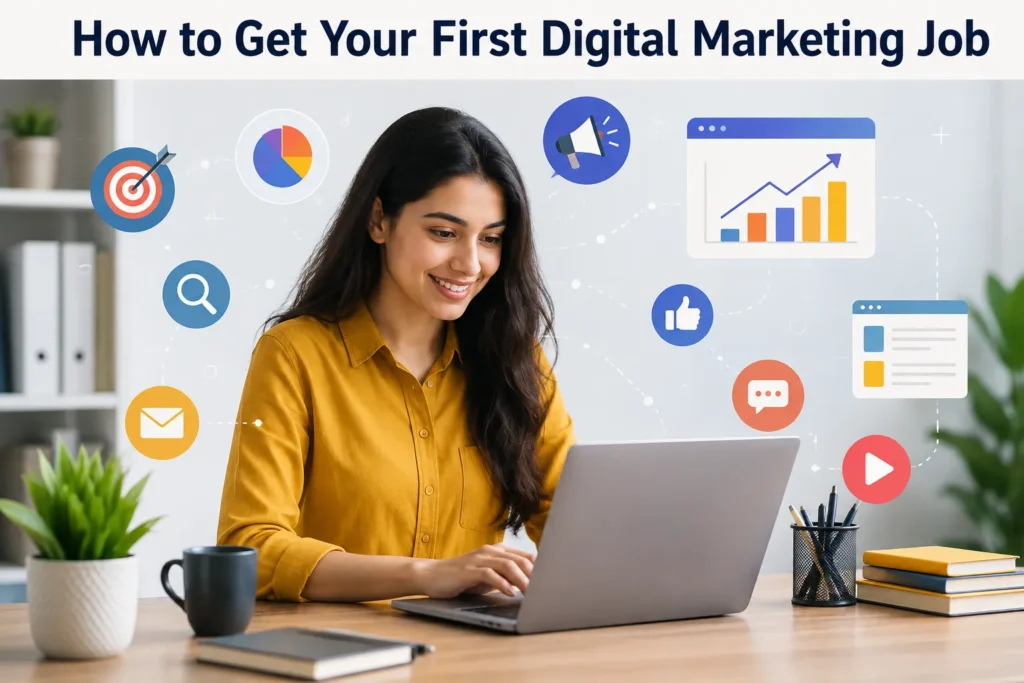
Starting a career can feel challenging when every job description seems to ask for previous experience. The good news is that digital marketing is one of the fields where you can build practical experience before getting your first job. With the right skills, projects, portfolio, and job-search strategy, you can successfully start your career even without professional experience. If you are wondering how to get job in digital marketing, here are some practical steps to help you get started. How to Get Job in Digital Marketing? 1. Learn the Fundamentals of Digital Marketing Before applying for jobs, understand the basics of digital marketing. You don’t need to master every area immediately, but you should have a good understanding of the major channels. Start by learning: Search Engine Optimization (SEO) Social Media Marketing Google Ads and Pay-Per-Click (PPC) Content Marketing Email Marketing Google Analytics Keyword Research Basic Conversion Optimization Focus on understanding how these channels help businesses generate traffic, leads, sales, and brand awareness. 2. Develop One or Two In-Demand Skills Trying to learn everything at once can become overwhelming. Instead, choose one or two areas and develop strong practical knowledge. For example, if you choose SEO, learn keyword research, on-page SEO, technical SEO basics, link building, Google Search Console, and performance analysis. Similarly, if you are interested in social media marketing, learn content planning, audience research, social media analytics, and basic paid advertising. Having specialized skills can make your profile more attractive for entry-level digital marketing jobs. 3. Get Certifications Certifications can strengthen your resume, especially when you don’t have professional experience. You can explore certifications and courses from platforms such as Google, HubSpot, Semrush, and other reputable marketing education platforms. However, don’t collect certificates just to fill your resume. Employers generally value practical knowledge and the ability to demonstrate results more than a long list of certificates. 4. Create Your Own Digital Marketing Projects One of the best ways to gain experience without having a job is to create your own projects. Start a simple website or blog and practice SEO. Research keywords, publish optimized content, monitor Google Search Console data, and improve your rankings. You can also create a social media page and develop a content strategy for it. These projects give you something valuable to discuss during interviews and demonstrate that you can apply what you’ve learned. 5. Build a Strong Digital Marketing Portfolio A portfolio can help bridge the gap between no experience and practical experience. Your portfolio can include: SEO projects Keyword research examples Website audits Content samples Social media campaigns Google Ads campaign examples Analytics reports Before-and-after performance data Even if these projects aren’t from a paid job, clearly explain what you did, why you did it, and what results you achieved. 6. Look for Internships and Freelance Opportunities If you’re struggling to find a full-time position, don’t ignore internships or freelance projects. A short internship can provide real-world exposure to clients, campaigns, reporting, and marketing tools. Freelancing can also help you build client experience and portfolio projects. You can start by offering services to small businesses, local companies, startups, or people in your network. 7. Optimize Your Resume and LinkedIn Profile Your resume should focus on skills, projects, certifications, and measurable achievements instead of simply saying that you have no experience. Also optimize your LinkedIn profile with relevant digital marketing keywords such as SEO, content marketing, Google Ads, social media marketing, and analytics. 8. Apply Strategically and Prepare for Interviews Don’t apply randomly to hundreds of jobs. Search for positions such as Digital Marketing Executive, SEO Executive, PPC Executive, Social Media Executive, Content Marketing Executive, and Digital Marketing Intern. Before every interview, research the company and understand its website, social media presence, and marketing strategy. Be prepared to answer practical questions such as: How would you improve website traffic? How do you perform keyword research? What is on-page SEO? How would you measure campaign performance?What would you do if organic traffic suddenly dropped? Final Thoughts Getting your first digital marketing job without experience is challenging, but it is absolutely possible. The key is to replace “professional experience” with demonstrable skills and practical projects. Learn the fundamentals, specialize in valuable skills, create your own projects, build a portfolio, gain internship or freelance experience, and apply strategically. If you’re asking how to get job in digital marketing, remember that you don’t have to wait for someone to give you your first opportunity you can start building experience today.

How Long Does It Take to Learn Digital Marketing
blog

How Long Does It Take to Learn Digital Marketing?

If you have ever spent an evening scrolling through job boards or Instagram, you have probably stumbled across an ad promising you can master digital marketing in just seven days. It sounds amazing, right? A quick certification, a shiny badge for your LinkedIn profile, and suddenly you are running high-budget campaigns for major brands. The reality is a bit more grounded. If you are sitting down to figure out how long this actually takes, let’s skip the marketing fluff and look at what it truly requires. You can easily grasp the core theory and fundamentals in about 1 to 3 months. But becoming genuinely job-ready, confident when a campaign fails, and skilled enough to drive real, measurable revenue? That usually takes around 6 to 12 months of rolling up your sleeves and doing the actual work. Let’s break down what your journey will actually look like, month by month, and why certain skills take longer to stick. 1. The Real Timeline: From Absolute Beginner to Confident Professional When people ask about the timeline, they want to know what their life will look like at different stages. Here is a realistic roadmap of how your brain and your skillset will evolve. Months 1 to 3 (The Confusion-to-Clarity Phase): This is where you learn the language. You will figure out what SEO actually stands for, how pixels work on websites, and why organic reach feels so elusive. By the end of this stretch, you won’t feel like an expert, but terms like “impressions,” “conversions,” and “bounce rate” will finally stop sounding like alien code. Months 3 to 6 (The Experimentation Phase): This is my favorite stage because it’s where things get fun. You stop just reading tutorials and actually start building things. You will launch your first tiny budget ad on Meta or Google, set up a tracking dashboard in Google Analytics, and maybe even play around with AI tools to help write your ad copy. You will make mistakes, like targeting the wrong audience or blowing through a small test budget, and that is entirely normal. Months 6 to 12 (Finding Your Groove): True confidence doesn’t come from passing a multiple-choice test; it comes from troubleshooting. During this window, you learn how to look at a flatlining campaign and figure out how to fix it. You start building a portfolio of real projects, and you realize you can hold your own in a marketing meeting. 2. Why Your Speed Depends on More Than Just a Course Have you ever wondered why two people can take the exact same bootcamp, but one gets hired immediately while the other struggles? It rarely comes down to raw talent. Instead, it usually boils down to three hidden factors: Your Daily Time Investment: If you are treating this like a casual hobby, dedicating just 30 minutes a week, it might take you years to catch up. But if you can carve out 3 to 4 focused hours a day, mixing video lessons with hands-on practice, you can compress that timeline significantly. Your Natural Inclination: Lean into what you already enjoy. If you love writing, storytelling, and human psychology, Search Engine Optimization (SEO) and content marketing will feel like second nature. If you are more analytical, enjoy staring at spreadsheets, and love tracking numbers, performance marketing (paid ads) will click much faster. Your Learning Environment: Watching prerecorded video lectures in isolation is a slow path. True acceleration happens when you work on live projects. Whether that means joining a structured digital marketing course with placement support or simply building a mock website for a local coffee shop to test your strategies, active application beats passive watching every single time. 3. Breaking Down the Specializations Trying to master every single branch of digital marketing all at once is a fast track to severe burnout. Different tracks have completely different learning curves: Social Media & Content Marketing: The basics take about a month to pick up, but building a brand voice, understanding shifting platform algorithms, and keeping an audience engaged over the long haul takes roughly 4 to 6 months of daily consistency. SEO and Organic Growth: This is the ultimate test of patience. Because search engines take time to crawl, index, and trust a website, you will need to spend 4 to 6 months just learning the mechanics of technical and on-page optimization, let alone seeing your results climb the rankings. Paid Ads (Performance Marketing): Setting up a campaign dashboard takes an afternoon. However, mastering audience segmentation, bid strategies, and optimizing your return on ad spend (ROAS) requires 6 to 9 months of active campaign management and budget tweaking. Bringing It All Together At the end of the day, a certification is just a piece of paper. The real power comes from the portfolio you build along the way. Don’t wait until you feel “100% ready” to start doing the work—because in digital marketing, things change so fast that nobody ever feels completely ready. Launch a personal blog, run a micro-budget campaign for a passion project, or offer to manage social media for a local nonprofit. That real-world friction is where the true learning happens.